



Notícias
3D Digital Printing Imitation Embroidery Process
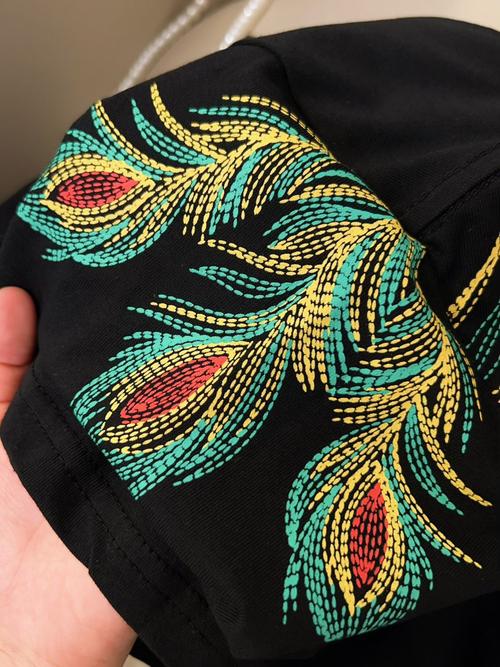
3D digital printing, a process that mimics the texture, luster, and feel of traditional embroidery, integrates UV printing, digital direct-to-garment printing, and other digital technologies with special inks and transfer processes. This innovative technique is widely used in the clothing, footwear, and other industries to simulate the three-dimensional texture, luster, and tactile feel of traditional embroidery on fabrics and various materials.
Features:
**High Efficiency and Low Cost:** Overcoming the limitations of traditional embroidery, which relies heavily on manual labor and has long production cycles, 3D embroidery printers from companies like Taituo Digital can print standard patterns at a speed of 5-6 square meters per hour, and even 3D foamed patterns can reach 2-3 square meters per hour. Furthermore, it eliminates the need for plate making and thread matching, supports printing from a single piece, and saves on the high labor and thread costs of traditional embroidery. Small-batch customization also incurs no additional fees.
**Realistic and Flexible Effects:** Replicating the raised texture of embroidery with millimeter-level precision, some processes use metallic inks or pearlescent coatings to simulate the luster of embroidery thread, making it difficult to distinguish from traditional embroidery by the naked eye and touch. Simultaneously, colors are not limited by the type of embroidery thread, easily presenting complex gradient colors and solving the problem of difficult color reproduction in traditional embroidery.
**Realistic and Flexible Effects:** Replicating the raised texture of embroidery with millimeter-level precision, some processes use metallic inks or pearlescent coatings to simulate the luster of embroidery thread, making it difficult to distinguish from traditional embroidery by the naked eye and touch. At the same time, colors are not limited by the type of embroidery thread, easily presenting complex gradient colors, solving the problem of difficult color reproduction in traditional embroidery. Wide adaptability: It can be used not only for commonly used clothing fabrics such as cotton, polyester, and denim, but also for shoe, hat, and bag materials such as leather and canvas. It can even achieve an embroidery-like effect on non-woven fabrics such as acrylic and metal, making its application scenarios far exceed those of traditional embroidery.