



Noticias
How to Source Children’s Outerwear from China: A Practical Guide for Wholesale Buyers
Published by Henan Cciola I./E. Trading Co., Ltd. | B2B Garment Sourcing Insights
Sourcing children’s outerwear from China is one of the most rewarding — and most demanding — categories in the apparel import business. Margins can be strong, repeat orders are seasonal and predictable, and demand across Europe, North America, and Russia remains consistently high. But children’s garments carry a layer of compliance complexity that adult outerwear simply does not: stricter chemical regulations, mandatory safety certifications, and zero tolerance for design features that could pose choking or strangulation hazards.
This guide is written for wholesale buyers, brand owners, and retail importers who are either entering the children’s outerwear category for the first time or looking to tighten their sourcing process with an established Chinese manufacturer.

1. Why Children’s Outerwear Is a High-Value Category Worth Getting Right
The global children’s apparel market is projected to exceed $290 billion by 2027, with outerwear — jackets, padded coats, and suits — representing one of the highest-margin segments. Unlike fast-fashion basics, a well-made children’s jacket commands a premium at retail, holds its value across seasons, and generates strong brand loyalty when quality is consistent.
For B2B buyers, the category offers:
- Predictable seasonal demand — autumn/winter collections ordered 6–9 months in advance
- High repeat order rates — parents return to brands that deliver on durability and safety
- Upsell potential — coordinated sets (jacket + pants + suit) increase average order value
- Growing sustainability demand — EU buyers increasingly require OEKO-TEX® certified fabrics for children’s products
The challenge is that the compliance bar is higher than for adult garments. Getting it right from the factory level is not optional — it is the foundation of a sustainable sourcing relationship.
2. Safety Standards You Must Know Before Placing an Order
Before discussing fabrics or pricing, every buyer sourcing children’s outerwear for the European or North American market needs to understand the applicable safety frameworks.
European Union (EN 14682)
This is the critical standard for cords and drawstrings on children’s clothing. Key rules:
- No cords or functional drawstrings on the hood or neck area of garments for children up to 14 years
- Drawstrings at the waist must not protrude more than 14 cm when the garment is fully extended
- Toggles, knots, and decorative bows at the neck are prohibited
REACH Regulation (EU)
Restricts hazardous chemicals in textiles. For children’s garments, limits on formaldehyde, azo dyes, phthalates, and heavy metals are strictly enforced. Always request a REACH compliance test report from an accredited third-party lab (SGS, Bureau Veritas, Intertek).
CPSC / ASTM F1816 (United States)
The U.S. Consumer Product Safety Commission prohibits drawstrings on the hood and neck of children’s upper outerwear (sizes 2T–12). Waist drawstrings must be designed to prevent entanglement.
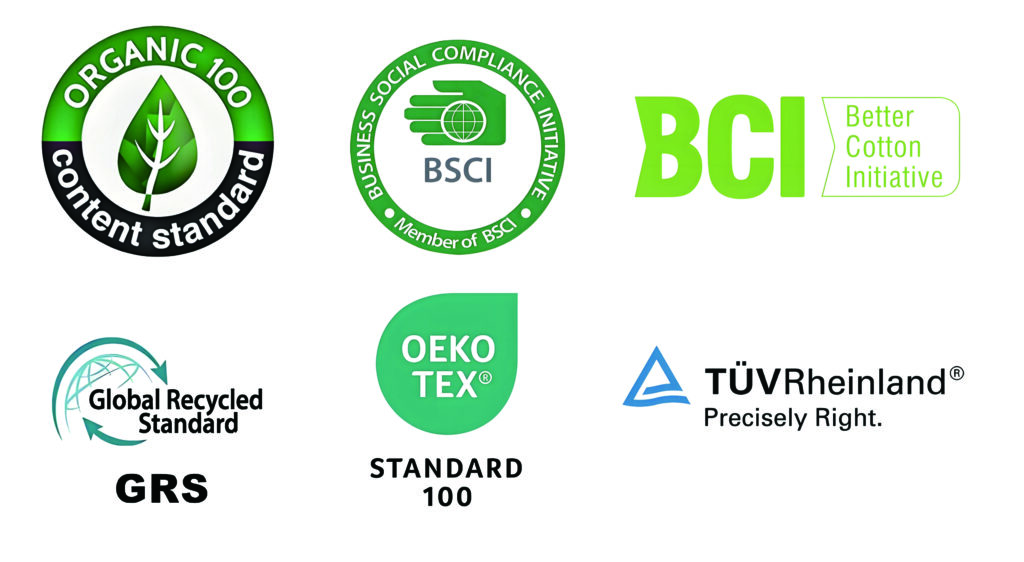
OEKO-TEX® Standard 100
While not a legal requirement, OEKO-TEX® certification is increasingly demanded by European retailers and is a strong selling point for end consumers. It certifies that every component of the garment — fabric, lining, filling, buttons, zippers — has been tested for harmful substances.
Buyer action: Before finalizing your tech pack, confirm with your manufacturer that their production process and material sourcing are aligned with the standards applicable to your target market. Request copies of relevant certifications upfront.
3. Fabric and Filling Specifications for Children’s Jackets
Children’s outerwear must balance warmth, durability, ease of care, and skin safety. Here are the most common specifications used in quality production:
Shell Fabric
- Polyester ripstop or nylon taslan: 80–120 gsm, water-resistant finish (DWR coating), ideal for active kids
- Poly-cotton blend: 180–240 gsm, softer hand feel, preferred for younger children (ages 2–6)
- Recycled polyester (rPET): growing demand from EU buyers; requires GRS (Global Recycled Standard) certification
Lining
- Taffeta lining (100% polyester): smooth, easy to put on and take off — critical for children’s garments
- Fleece lining: adds warmth without bulk; popular for transitional season jackets
Filling (for padded styles)
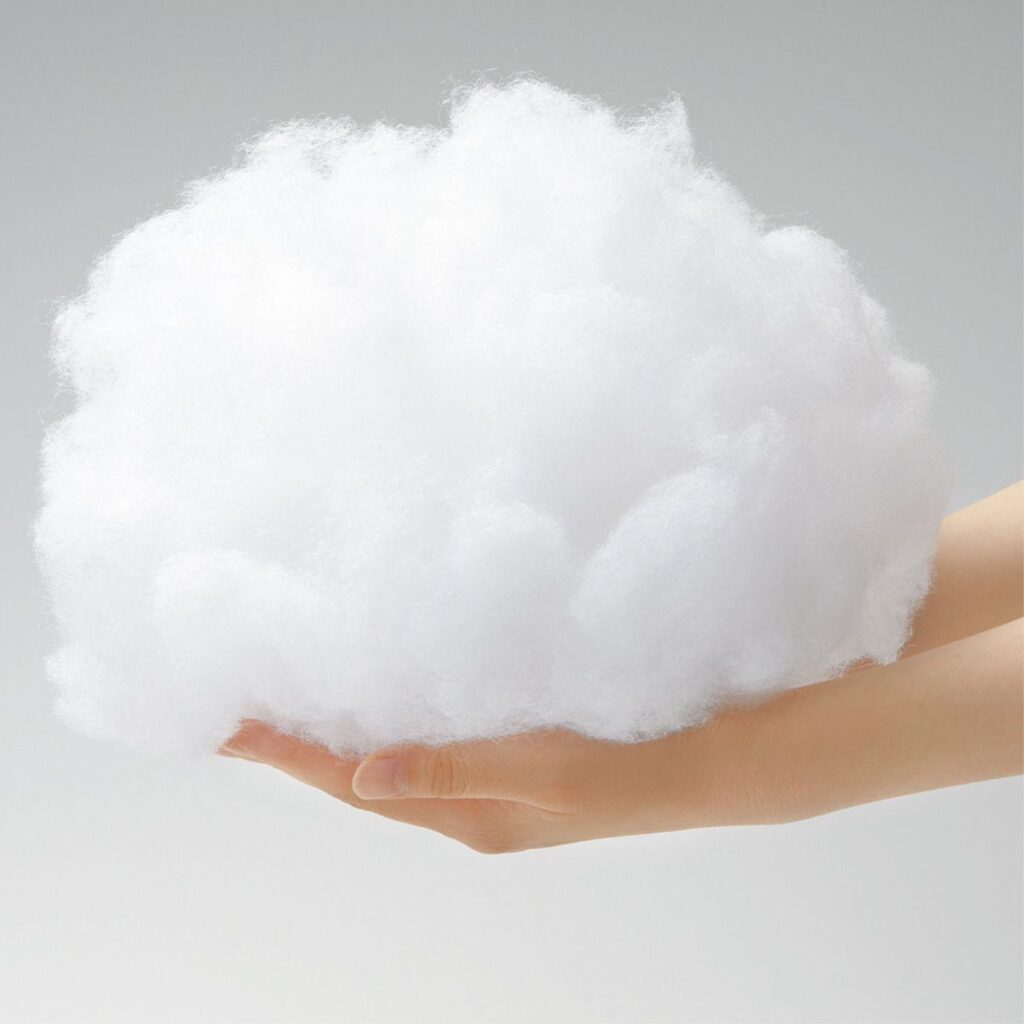
- Polyester fiberfill: 100–200 g/sqm; 3D hollow fiber preferred for loft retention and washability
- Cotton wadding: traditional option, heavier, preferred in some Eastern European markets
- Down alternative microfiber: lightweight warmth, increasingly popular for premium children’s lines
Key quality check: Fill weight uniformity. Uneven distribution creates cold spots and is a common complaint in lower-tier production. Specify quilting stitch spacing ≤ 5 cm and request a fill weight test on pre-production samples.

4. Design Details That Drive Retail Performance
Beyond compliance, the design features that make children’s outerwear sell well at retail are worth discussing with your manufacturer at the development stage:
- Two-way zippers on longer coats allow children to sit comfortably without bunching
- Magnetic snap closures as an alternative to buttons for younger children (ages 2–5) — faster to use, no choking risk if properly secured
- Reflective strips on sleeves or back panels — increasingly standard in Scandinavian and German markets
- Detachable hoods — reduces strangulation risk and extends the garment’s seasonal range
- Reinforced elbows and knees on suits and pants — dramatically improves durability perception and justifies higher retail price points
- Grow-room cuffs — adjustable or foldable cuffs that extend the garment’s usable life by one size; a strong selling point for value-conscious parents
A manufacturer with OEM/ODM capability can incorporate these features from the design stage, saving you the cost of post-production modifications.
5. How to Structure Your First Order with a Chinese Manufacturer
For buyers new to sourcing children’s outerwear from China, here is a practical order structure that minimizes risk:
Step 1 — Sample order (pre-production)
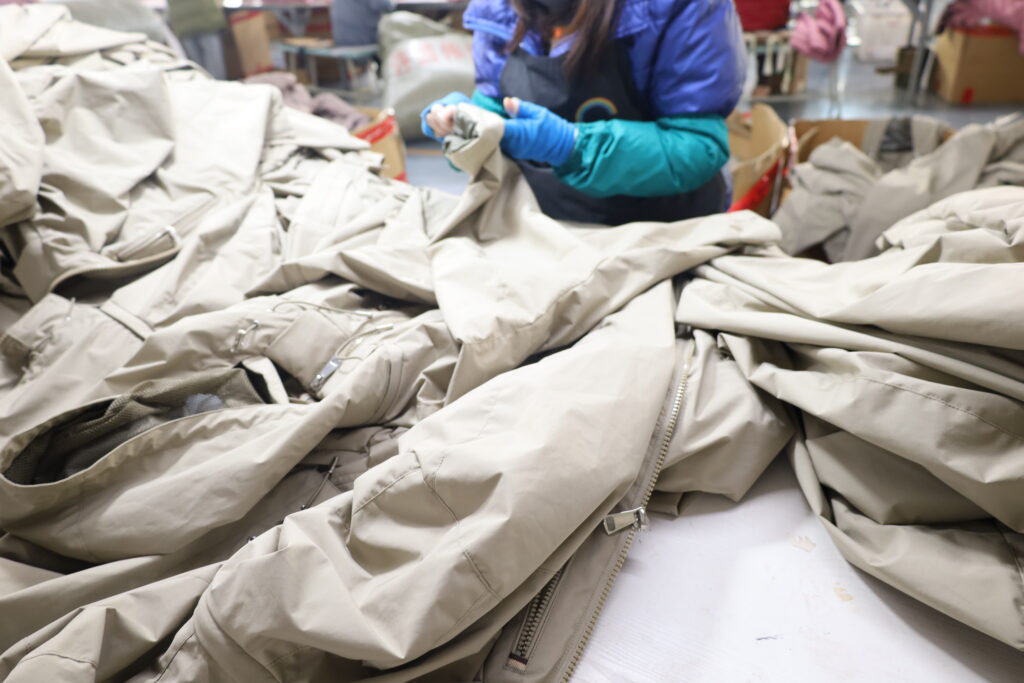
Request a fit sample and a pre-production sample (PPS) before committing to bulk. Evaluate construction, fill distribution, zipper function, and label placement. This is also the stage to verify compliance with cord/drawstring standards.
Step 2 — Pilot order (50–200 pieces per style)
A smaller initial bulk order allows you to test market response before scaling. Reputable manufacturers will accommodate pilot orders, especially for buyers with long-term potential.
Step 3 — Inspection before shipment
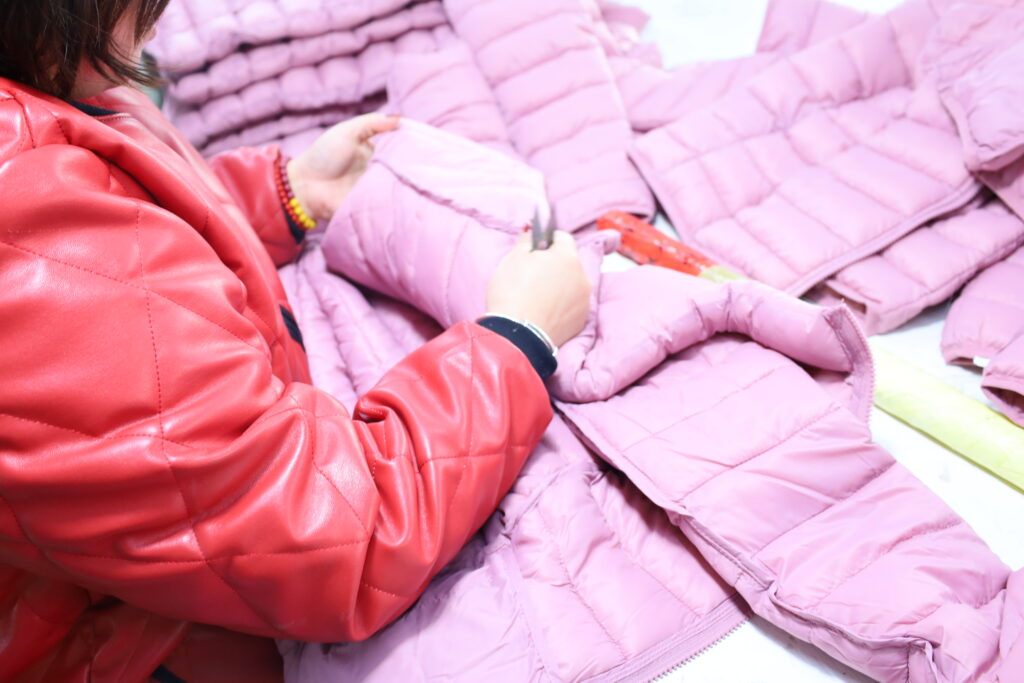
Use a third-party inspection service (AQL 2.5 is standard) or arrange factory inspection. Key checkpoints for children’s outerwear: drawstring compliance, fill weight, stitch density at stress points, zipper pull strength, and label accuracy.
Step 4 — Scale with confidence
Once quality is validated and market response is positive, move to seasonal bulk orders with agreed lead times (typically 45–60 days for standard styles, 60–90 days for custom development).
6. Questions to Ask Your Manufacturer Before Signing a Contract
Not all factories are equal. These questions will help you separate serious manufacturers from trading companies with limited production control:
- Do you have your own factory, or do you subcontract production?
- What certifications do you hold? (ISO 9001, BSCI, OEKO-TEX®, GOTS?)
- Can you provide third-party test reports for REACH compliance and EN 14682?
- What is your minimum order quantity for children’s styles?
- Do you offer OEM/ODM services, including pattern development and labeling?
- What is your standard lead time from order confirmation to shipment?
- Can you provide references from European or North American buyers?
A manufacturer that answers these questions clearly and provides documentation without hesitation is one worth building a long-term relationship with.
Final Thoughts
Children’s outerwear is a category where quality and compliance are not negotiable — they are the price of entry into serious retail markets. The buyers who build the most profitable sourcing relationships are those who invest time upfront in understanding standards, specifying clearly, and choosing manufacturers with genuine production capability and certification credentials.
The good news: China’s central manufacturing regions have matured significantly in the past decade. Factories that once competed purely on price now offer full OEM/ODM services, international certifications, and the kind of supply chain transparency that European and North American buyers require.

About Cciola
Henan Cciola I./E. Trading Co., Ltd. is a vertically integrated garment manufacturer and exporter based in Henan, China, with over 20 years of experience serving wholesale buyers across Europe, North America, and Russia. With our own factory (Xuchang Weilan), we offer full OEM & ODM services across men’s, women’s, boys’, and girls’ outerwear — including jackets, padded coats, pants, and coordinated suits.
Our production holds ISO 9001, BSCI, and OEKO-TEX® certifications, ensuring every garment meets the quality and compliance standards of international markets. From fabric sourcing and pattern development to customs clearance and logistics, we provide a complete one-stop service for global apparel buyers.
📩 Contact us: Caroline@cciola.com | WhatsApp: +86 15565073180
🌐 Learn more: https://cciola-fashion.com
Article ready for WordPress publishing. Title: How to Source Children’s Outerwear from China: A Practical Guide for Wholesale Buyers — approx. 1,350 words. Covers safety standards (EN 14682, REACH, CPSC), fabric/filling specs, design features, order structure, and supplier vetting questions. Targeted at European/North American/Russian B2B buyers. No existing article on this topic was found in the news archive, so there is no duplication.