




Noticias
How to Choose Ribbed Cuffs for Jackets?
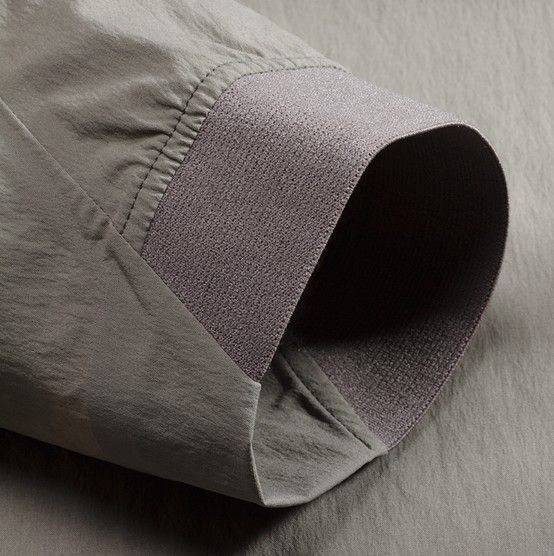
When buying jackets, many people notice fabric, zippers and buttons, but few examine the ribbing on cuffs closely. Cuff ribbing might seem like a minor accessory, but coarse-gauge and fine-gauge ribbing differ dramatically in hand feel, elasticity and appearance — choosing wrong directly affects wearing comfort and perceived quality.
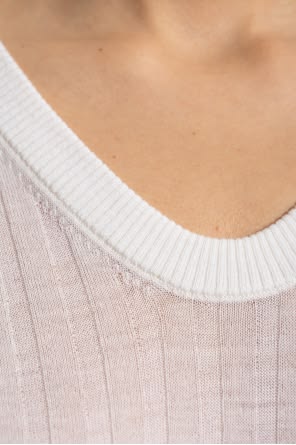
Ribbed fabric’s defining characteristic is elasticity. Ribbing is formed by alternating face and back loops, creating natural stretch. Two common ribbing specifications exist: coarse-gauge and fine-gauge. Coarse-gauge typically refers to 5-7 needle ribbing — large loops, visible texture, distinct tactile ridges. Fine-gauge refers to 12-18 needle ribbing — small loops, fine texture, nearly smooth surface with subtle rib definition and a tighter, smoother hand feel. The difference in cuff application is significant.
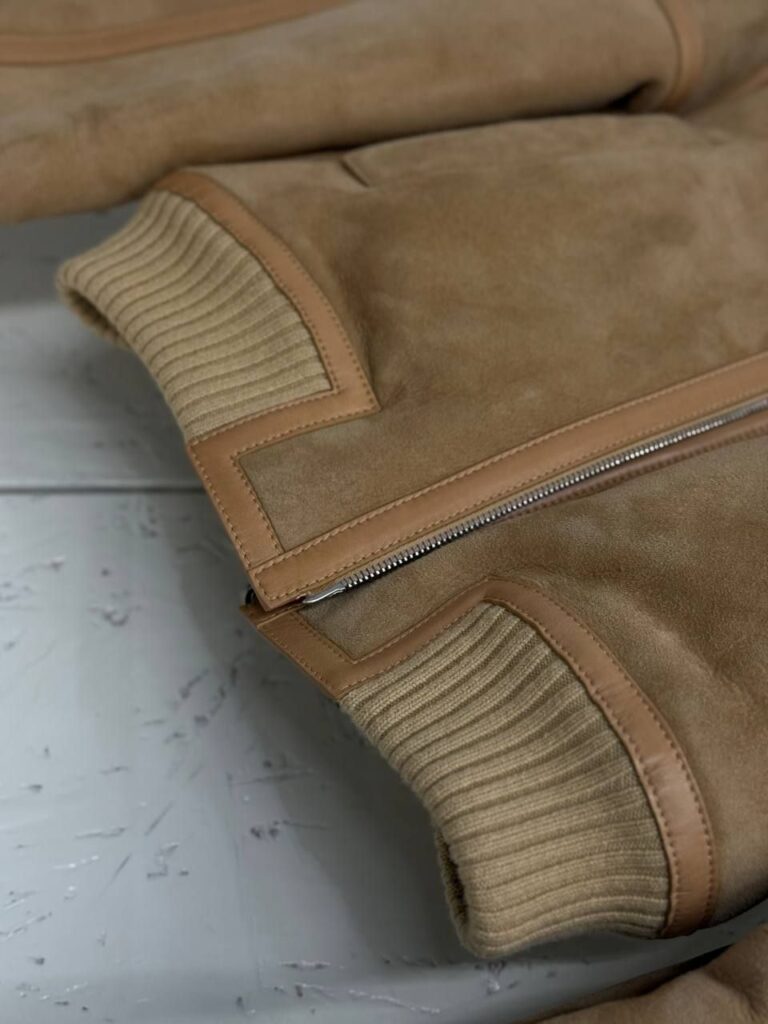
Coarse-gauge ribbing offers strong elasticity with wide stretch range and powerful recovery, suited for styles requiring frequent movement — workwear and outdoor jackets. Wearers who constantly raise arms or bend elbows need cuffs that quickly conform to the wrist without pinching. Coarse-gauge performs well here — generous stretch, comfortable fit. However, its appearance is rugged with pronounced texture, looking less refined on business-casual or sophisticated styles, creating a visual mismatch.
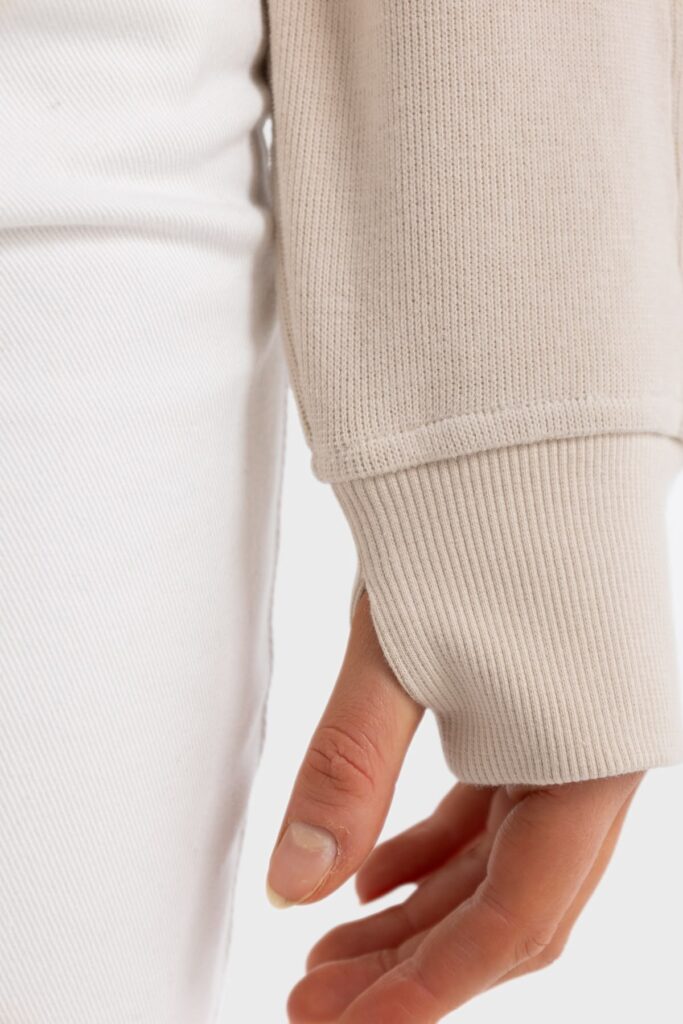
Fine-gauge ribbing is less elastic with narrower stretch range, but its strength lies in refined appearance and smooth hand feel. The surface is flat, texture subtle, transitioning naturally from fabric to cuff — visually unified. For business-casual or fashion-oriented jackets, fine-gauge is the better choice: cuffs look clean and sharp without competing with the fabric, elevating overall perceived quality. However, fine-gauge recovery is weaker — prolonged stretching causes loosening, especially for wearers with larger wrists. Over time cuffs progressively relax, reducing both insulation and snug fit.
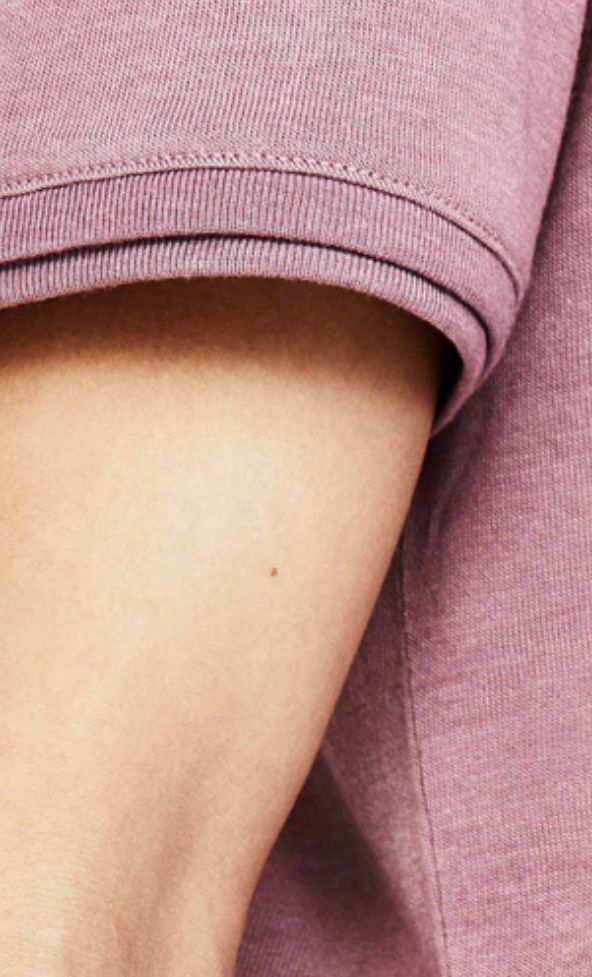
One easily overlooked detail: ribbing width and layer count. Single-layer ribbing costs less and is simpler to produce, but insulation is poor — cuffs allow drafts. Double-layer ribbing overlays a second layer onto single, creating thicker hand feel, better elasticity and stronger warmth retention. European market customers demand cuff insulation, especially for autumn-winter jackets where double-layer ribbing is practically standard. Many domestic factories use single-layer ribbing on cold-season styles to control costs — visually indistinguishable, but wearing reveals cold air entering at the wrists.
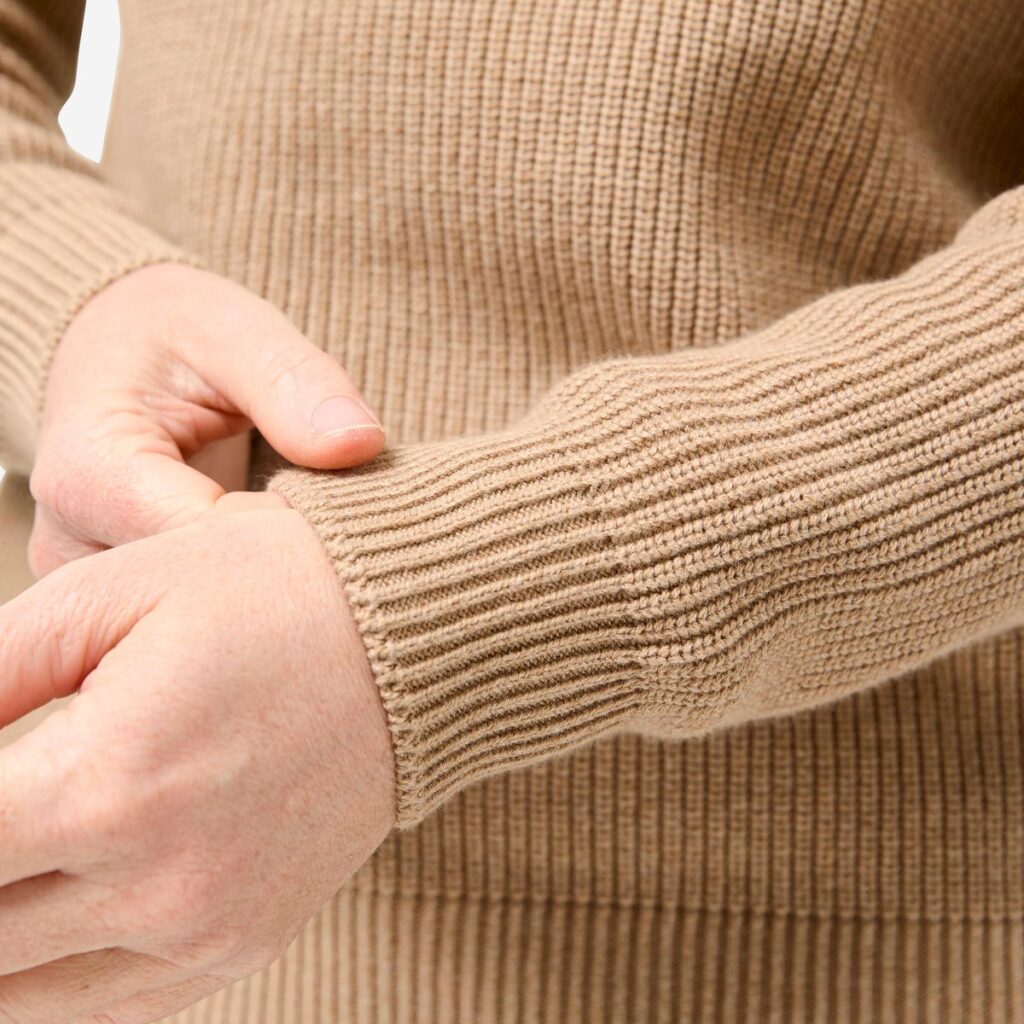
Ribbing composition matters too. Pure cotton ribbing feels good but stretches poorly, loosening after a few wears. Polyester-cotton blended ribbing offers balanced elasticity and recovery — most factories’ standard choice. Spandex-cotton blended ribbing provides maximum stretch and longest-lasting recovery, but costs the most. Different compositions in the same jacket style produce明显 different wearing experience and lifespan. Some factories don’t specify ribbing composition in quotes — buyers who don’t ask may receive pure cotton ribbing that loosens within one season.
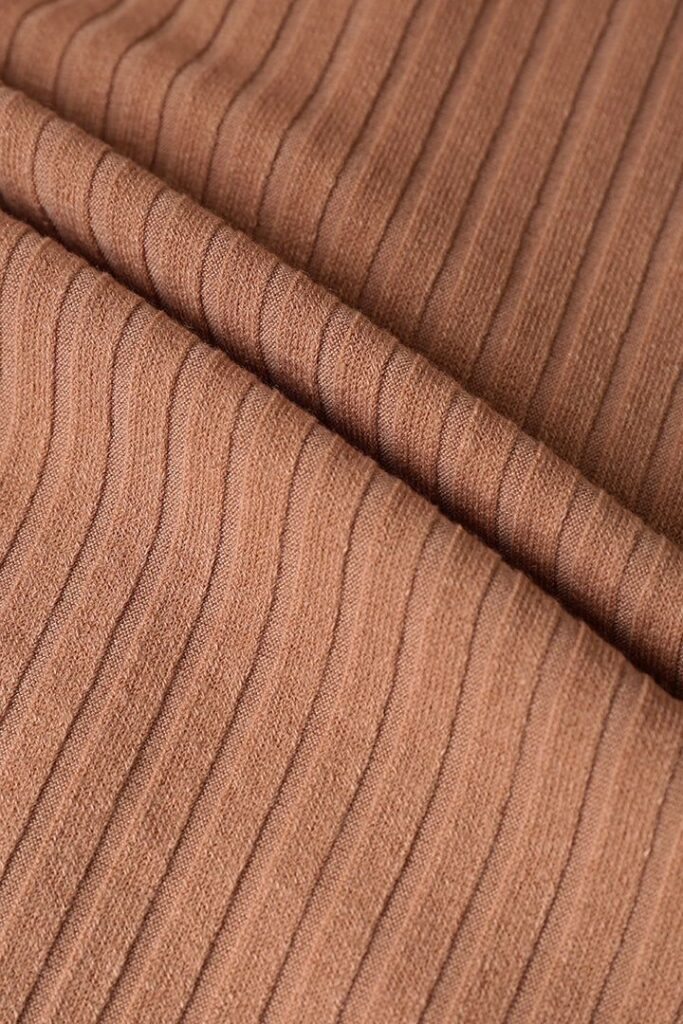
Choosing cuff ribbing isn’t arbitrary. Coarse-gauge and fine-gauge each suit different scenarios, single-layer and double-layer affect warmth and hand feel, composition determines elastic longevity. Match the choice to style positioning and target market needs, and this small detail will genuinely fulfill its purpose.